
Opening the Shop at Dawn: Questions for a Main Street Baker
Luc Gagnon
6 minutes to read
A short interview with Anselm, who has run a small bakery on a town high street for years, about the early hours and the neighbours who pass his door.
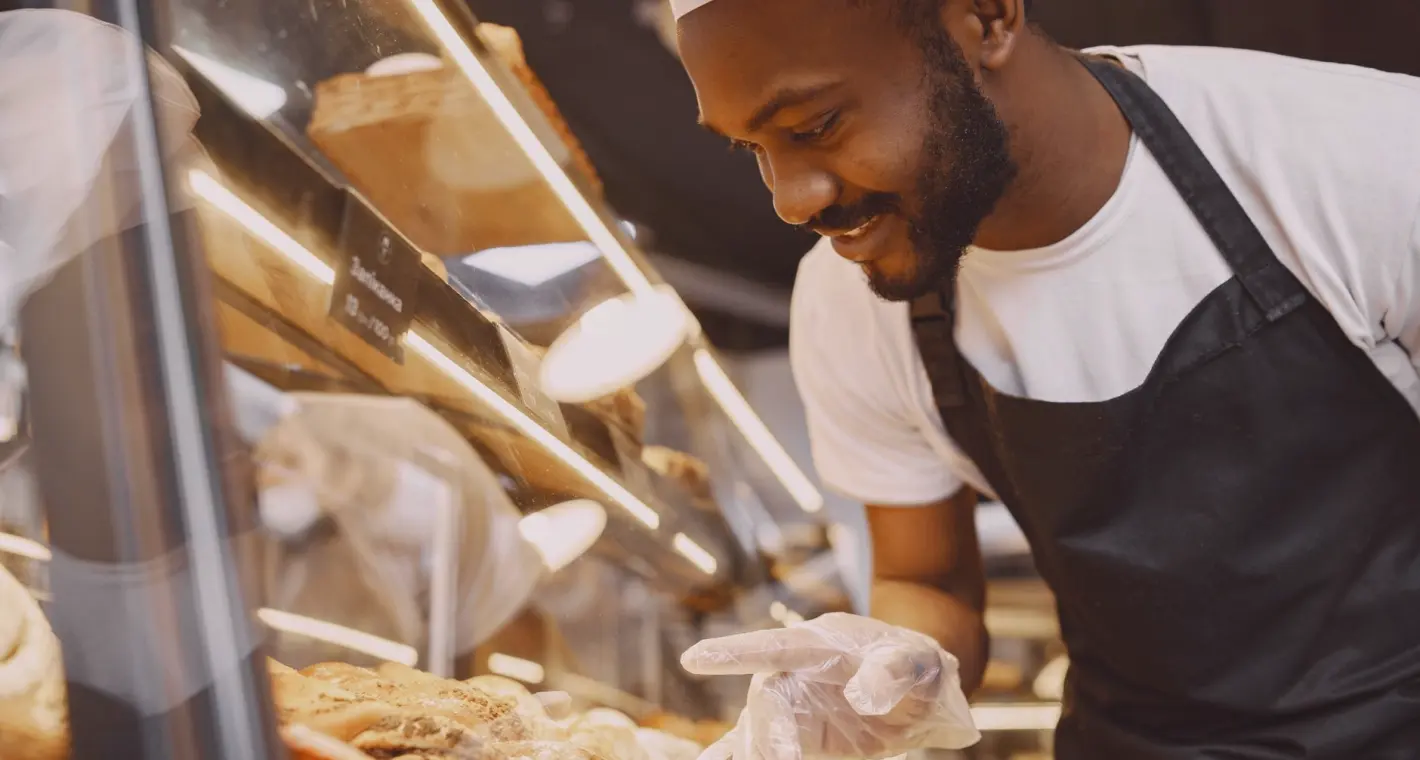
Why we asked a baker about the street
People & Places looks at towns and neighbourhoods through the people who keep them running, and the shared spaces between their doors. For this piece I wanted someone who sees the same stretch of sidewalk every morning, long before most of us are awake. Anselm bakes bread and pastries in a narrow shop with a flour-dusted counter and a bell on the door.
He agreed to answer a few questions on a quiet weekday afternoon, between the morning rush and the evening pickup. What follows is a short interview in questions and answers, lightly trimmed for length. I have kept his phrasing where I could, because the way he describes his block says as much as the details do.
I should say plainly that I am not a baker, only a neighbour with a notebook. My questions came from curiosity about what a street looks like from behind a counter, and what it asks of the person standing there day after day.
The conversation ran about forty minutes. I chose the questions below because each one led to something I had not expected to hear.
Question one: what is the first hour like?
I asked Anselm what the shop feels like when he unlocks it. He said the street is nearly silent at that hour, with only a delivery van idling somewhere and the streetlights still on. "You hear the oven fans before you hear anything else," he told me. "That is the sound of the day starting."
He described a routine that has barely changed: lights, ovens, then the first trays. By the time the sky turns grey he has already seen two or three regulars walk past on their way to early shifts, and they nod through the glass without stopping.
He admitted the early start is not for everyone. But he said the stillness is the part he would miss most, the sense of having the whole block to himself before it fills with people and cars and noise.
Question two: who comes through the door?
Next I asked who his customers are. He laughed and said it depends on the hour. Early on it is people heading to work, then parents after school drop-off, then retirees who stay to talk. "The talking is half of it," he said. "Some people come in more for the chat than the loaf."
He told me he has learned a lot about the street simply by listening. Who has new grandchildren, whose roof is being repaired, which family is moving away. None of it is gossip, he insisted, just the ordinary news of people who share a few blocks.
I found this the most telling answer of the afternoon. A shop like his becomes a small public room, a place where neighbours cross paths without planning to, and where the town quietly keeps track of itself.
Question three: what has the street taught you?
I asked what he would tell someone opening a shop on a similar street. His answer was about patience. "A street takes a while to trust you," he said. "You show up every morning, you keep the door open, and eventually you are part of how people describe the neighbourhood."
He also spoke about noticing small things: a bench that people use more than anyone expected, the corner where students wait for the bus, the tree that drops leaves across his step every autumn. He sweeps it each morning and has come to like the task.
What struck me was how little of this concerned the business itself. His attention was on the shared space outside the window, and on being a steady presence in it rather than only a place to buy bread.
Question four: what changes in the autumn?
Since we are in the middle of the season, I asked how the street shifts as the weather turns. He said the pace slows and the light comes in lower, so the shop glows in the late afternoon. People linger over hot drinks and stay longer once the cold arrives.
He bakes heavier loaves and spiced pastries this time of year, but he said the real change is in the mood. "Everyone is a little more inclined to stop and talk," he said. "The summer rush is over and people have time again."
For a photographer or a writer, he added, it is a generous season. The leaves, the steam on the windows and the long shadows across the sidewalk all make an ordinary morning look worth remembering, even to those who see it daily.
What stayed with me from the conversation
Walking back along the same block, I noticed things I had passed a hundred times: the worn step, the bench, the bell still ringing behind me. Anselm had described the street so closely that I could see it through his eyes.
That is what I value in the People & Places rubric. A town is made of small, repeated acts by people who keep a space alive without being asked to. A baker opening at dawn is one of them, and there are many others on every street.
If there is a person or a place in your own neighbourhood that holds things together in this way, it is worth noticing them this season, while the light is good and people have time to talk.
- Arrive when the shop is quiet, not during the rush
- Ask about the street, not only the business
- Listen for details only a daily regular would know
- Return in a different season to see what has changed
Get in touch
By email: [email protected]