
A Saturday Cleanup Brings Neighbours Back to the Laneway
Luc Gagnon
6 minutes to read
A volunteer group in one neighbourhood has been tidying a shared laneway and planting along its edge. Here is how the effort works and how readers can join in.
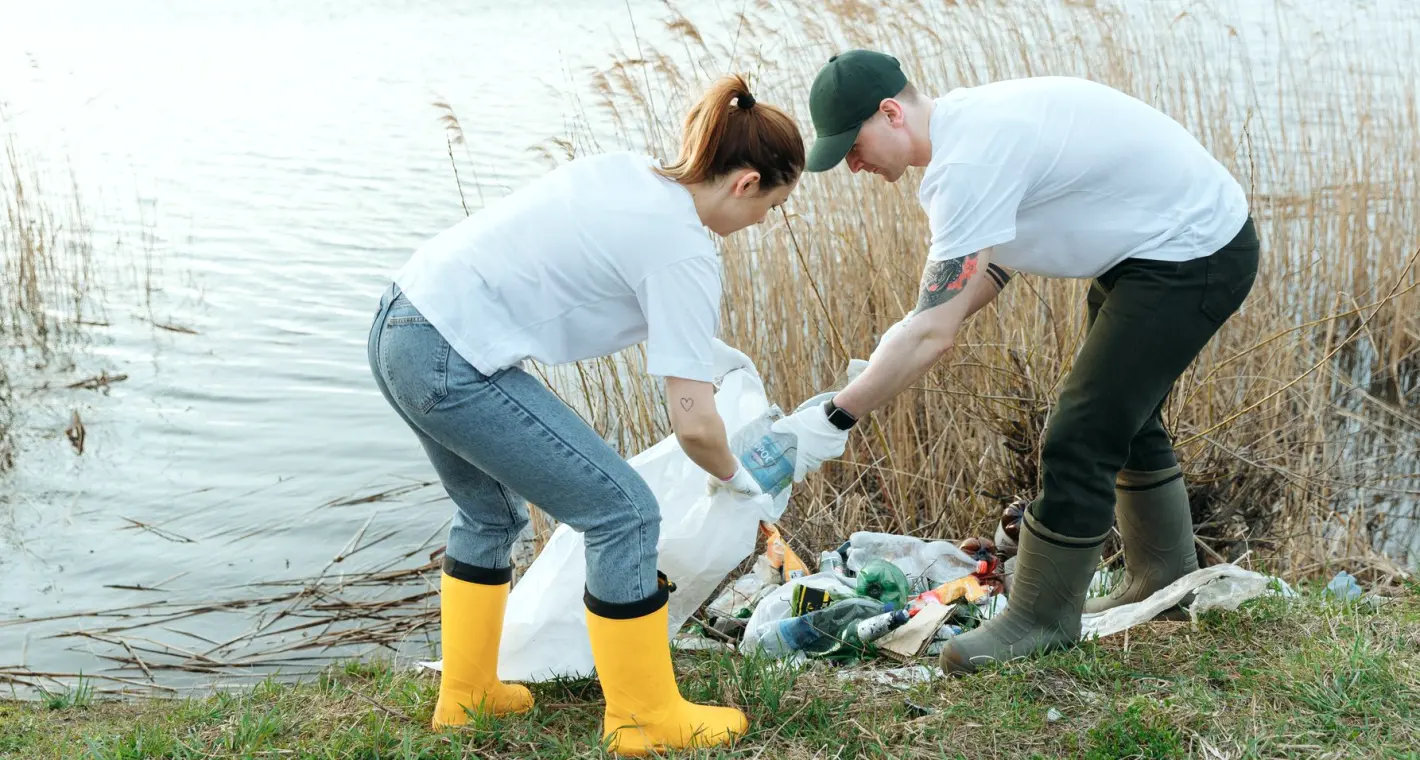
A laneway most people only walk through
The laneway runs behind a row of older houses and a small corner store, and for years it was a place people crossed on the way somewhere else. Bins stood along one side, a few fences leaned, and leaves collected in the corners each autumn. I visited on a grey, cool morning to see what a handful of neighbours had decided to do about it, and what struck me first was how ordinary the beginning was.
One resident, a retired school custodian named Gerald, had simply started sweeping a short stretch outside his own gate. A neighbour joined him with a wheelbarrow. Within a couple of weeks there were six or seven people turning up on Saturday mornings, bringing their own gloves and a thermos of something hot. Nobody called it a project at first. It was a habit that other people noticed and wanted to share.
What I photographed that morning was less about the work itself than about the small exchanges around it: a child holding a bag open, two neighbours who had lived on the street for a decade and only now learned each other's names, an older woman directing where the planters should go.
How the group got organized
There is no formal committee, and the people involved are firm about keeping it that way. Priya, who lives two doors from the laneway entrance, keeps a simple list of who is coming and what needs doing. Tasks are written on a sheet taped inside the corner store window, so anyone passing can see what is planned for the coming Saturday.
The routine is gentle. People arrive around nine, someone hands out bags and a few pairs of spare gloves, and the work is divided by what each person is comfortable doing. Some sweep, some pull weeds along the fence line, and others sort the recycling that has blown in over the week. By late morning the laneway looks noticeably different, and there is usually a plate of baking on the store's back step.
The group has also spoken with the building owners along the lane, who have been supportive, and the city's public works office has collected the bagged leaves on request. None of it required a grant or a launch; it grew from people showing up and being easy to work beside.
- No sign-up fee and no membership
- Gloves and bags are supplied on the day
- Tasks are posted at the corner store
What the work looks like in mid autumn
This is the busiest stretch of the year for the laneway. Leaves fall thickly, rain turns them to a slick mat on the pavement, and drains along the edge clog quickly. The group's main job these weeks is clearing that debris before it becomes a hazard, particularly for older residents who use the lane as a shortcut to the store.
They are also preparing for spring. A row of large planters, built from salvaged wood by a neighbour with a workshop, now lines one wall. Bulbs went into the soil last weekend, and the idea is that the first colour of the year will appear along a stretch that was bare gravel not long ago. I watched a man in his seventies kneel carefully to press each bulb in, explaining to a teenager how deep it should sit.
It is slow, cold, physical work, and yet the mood I noticed was cheerful. People talk while they sweep. The conversation turns to the street, to who has moved in, to a fence that needs mending.
The people I met along the way
Gerald is quiet about his part in all this and tends to deflect credit toward the others. He told me he simply disliked looking at the mess from his kitchen window. Priya laughed when I mentioned that, saying that most good community efforts start from some small irritation that someone finally decided to act on.
Among the regulars is Amara, a nurse who works night shifts and comes straight from the hospital some Saturdays because she finds the morning air restorative. There is also a pair of brothers in their early twenties who were roped in by their mother and have stayed because, as one put it, the work is oddly satisfying. Each of them has a slightly different reason for being there.
I asked a few of them whether the laneway felt different now. The answers were consistent: it feels like a place rather than a passage. People pause there. A bench, donated and bolted down last month, has already become a spot where neighbours stop to talk.
How readers can take part
Joining is as simple as turning up. The group meets on Saturday mornings at the laneway entrance beside the corner store, weather permitting, and newcomers are welcomed without any introduction or commitment. If you can only come once, that is genuinely fine; there is always something to do for an hour.
If you live in another neighbourhood, the more useful step may be to look at a stretch near you that nobody has claimed. Several people at the laneway said they would happily share what they learned: how to approach building owners, how to arrange leaf collection, how to keep a casual group from burning out. A conversation over the fence is often where these things begin.
Bring sturdy shoes, dress in layers, and carry a water bottle. Children are welcome, and so are people who would rather document the morning than sweep. A camera in the hands of a neighbour is a good way of remembering what the street looked like before and after.
- Meet at the laneway entrance beside the corner store
- Wear sturdy shoes and warm layers
- Children and first-timers are welcome
- Bring a camera if you would rather record than rake
What stays with me afterwards
I left with a set of photographs that are not dramatic. They show hands in gloves, a broom resting against a fence, steam rising from a thermos lid. But they hold the quality I find most worth recording in a neighbourhood: people choosing, without being asked, to look after a space they share.
The laneway will not be transformed overnight, and the group is realistic about that. Winter is coming, and the work will pause and then start again when the snow clears. What they have built is less a finished place than a rhythm that other people can step into.
Photographs like these remind me why this rubric exists. A town is made of such places, quietly kept by whoever cares enough to pick up a broom.
Get in touch
By email: [email protected]