
How We Choose Who Is Interviewed for Community Voices
Priya Sharma
5 minutes to read
A reader asked how neighbours, volunteers and local makers end up in our interviews. Here is a short, honest answer about how the choice is made and how you can suggest someone.
The question we were asked
A reader wrote to us in the past few days with a plain question: how does someone become part of Community Voices? She had noticed that the people in our interviews are rarely well known, and she wondered whether we picked them through some formal process or simply by chance.
The honest answer sits between the two. There is no application form and no list of approved subjects, but there is a way of working that I try to keep steady. Community Voices is where we publish interviews and first-person stories from neighbours, volunteers and local makers, and the choice of who appears shapes everything the rubric says about the places we cover.
I am writing this as the editor of the rubric, so the answer below is how I actually go about it, in these mid-autumn weeks when many people are back to routines and have more time to talk.
Where the names come from
Most of the people we speak with come to us sideways. A reader mentions a neighbour who has run the same community meal for years. A volunteer at a hall tells us about the person who unlocks it every morning. A maker at a small market stall turns out to have a story worth sitting down for.
I keep a running list of these suggestions, and I read it more often than you might expect. Nobody on it is ranked. When I am ready to plan the next conversation, I look for someone whose daily work or care for a place has gone unnoticed by anyone writing about it.
Suggestions from readers carry real weight because they come from people who see these neighbours regularly. A name offered with a short reason is far more useful to me than a long description of why a story would be important.
- A reader suggests a neighbour, volunteer or local maker
- I note why the person matters to their street or group
- We only go ahead if the person is willing to talk
What makes someone a good fit
I am not looking for the most eloquent speaker or the most remarkable life. I am looking for someone who is willing to describe their own days in their own words, including the unglamorous parts. A person who spends a Tuesday afternoon sorting donated winter coats can tell us more about a community than a polished speech.
Willingness matters more than anything. Some people are curious about being interviewed and some are not, and I would rather wait than persuade. If a person hesitates, I say that a no is a complete answer and leave it there.
I also think about balance across the year. I try not to speak with only one kind of person, so that readers meet younger and older voices, newcomers and people who have lived in the same house for decades.
How the conversation itself goes
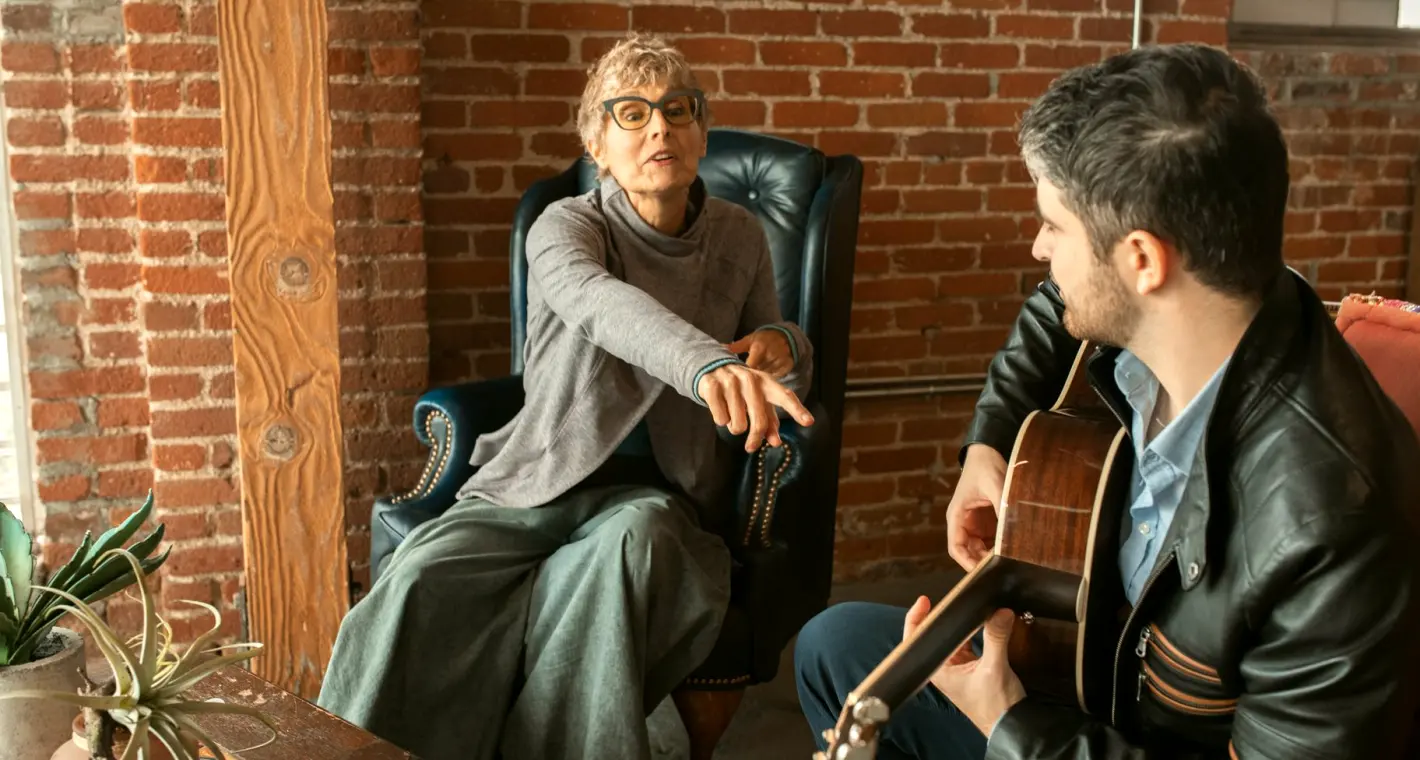
Before anything is recorded, we talk informally about what the person is comfortable sharing. I explain that the interview is a conversation, not a test, and that they can skip any question. Many people relax once they understand there is no right answer waiting for them.
Then I mostly listen. My questions are short, and I follow what the person offers rather than a fixed script. Often the most useful moment comes after the planned questions are finished, when someone adds something they had not meant to say.
Afterwards I edit for clarity and length, never for meaning. The person's words stay theirs, and where I am unsure what they intended, I ask them rather than guess. Photographs from the visit run alongside the text, so the reader sees the room and the hands as well.
- Informal talk first, so nobody is caught off guard
- Short questions that follow the person's lead
- Edits are for clarity and length, not meaning
Checking before anything is published
Before a piece goes live, the person we spoke with sees how we have written them up and has the chance to correct a detail, a spelling or a name. If they feel a passage says more than they wanted to share, we talk it through and adjust it.
This step takes a little extra time, and I would not drop it. People are trusting us with their own account of their lives, and a published sentence is hard to take back. A short delay is a fair price for getting it right.
The other editors on the team read the finished text too, so a second pair of eyes catches anything unclear before readers see it.
How you can suggest someone
If you know a neighbour, volunteer or local maker whose story deserves a conversation, write to us through the contact page. A few lines are enough: who the person is, what they do, and roughly where in the country they are.
Please ask the person first whether they would be open to hearing from us. That small courtesy makes the first contact much easier, and it respects their right to decide.
We cannot promise to speak with everyone suggested, because the rubric has room for only a handful of conversations at a time. But every message is read, and the names stay on the list for later.
- Say who the person is and what they do
- Ask them first if they would be open to a conversation
- Send the note through the contact page
Get in touch
By email: [email protected]