
Six Questions for a Neighbour Who Mends Things for a Living
Priya Sharma
5 minutes to read
Priya Sharma sits down with Daniel, a repair shop owner in Sudbury, to ask how he listens to customers, what he keeps on his bench and why he stays.
Why we asked a repairer to sit down with us
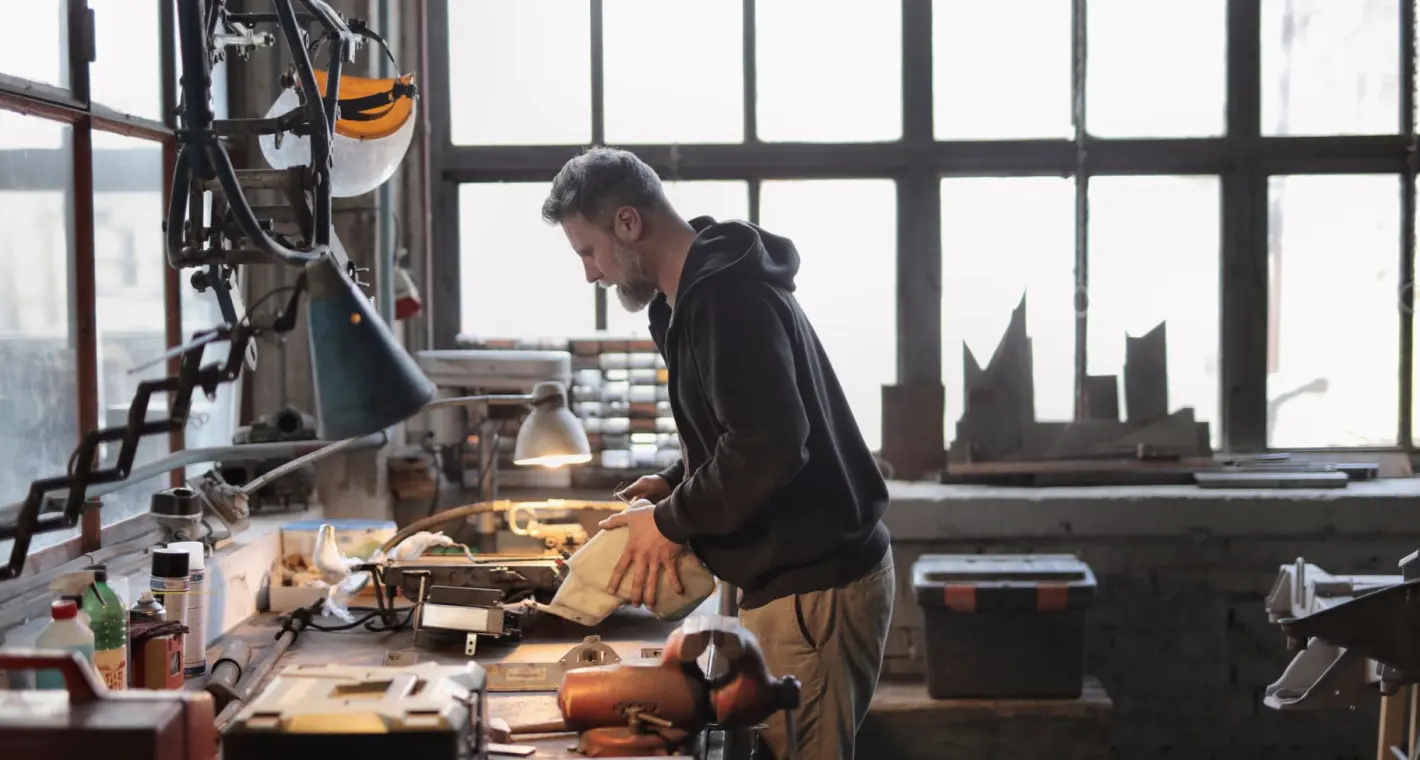
Community Voices is built on the idea that the people who keep a town running are rarely asked how they see it. For this interview I wanted someone whose work puts him in front of neighbours every day, without a script and without an audience. Daniel runs a small repair shop a short walk from our office, and he agreed to talk over a pot of tea between customers.
We kept the format simple: six questions, answered in his own words, lightly trimmed for length. I did not send the questions ahead of time, because I wanted the answers to come the way they would across a counter. What follows is the result, with my notes between the answers where a little context helps.
Daniel asked that we use only his first name, and we have honoured that.
Question one: how did you end up here?
I asked Daniel how a person arrives at a trade like his. He laughed and said it started with a broken radio in his parents' kitchen when he was a boy. Nobody wanted to pay for a new one, so he took the back off and kept going until it hummed again. He worked in other jobs for years, but the habit of opening things up never left him.
He told me the shop came later, after he noticed how many people carried a drawer of broken things they could not bring themselves to throw away. He said he opened the door mostly out of curiosity about whether anyone would walk in. They did, slowly at first, and then mostly by word of mouth from one neighbour to the next.
Question two: what do people really bring you?
Daniel said the objects matter less than the stories attached to them. A toaster is rarely just a toaster; it is the one that survived a move, or the one a late relative used every morning. He has learned to ask where something came from before he asks what is wrong with it, because the answer tells him how much care the repair deserves.
He keeps a shelf of items waiting for parts, and he said he writes a short note on each tag about the person, so he never mixes up whose heirloom is whose. I asked whether that slows him down. He shrugged and said the slowness is the point, since people trust a repairer who remembers them.
- Radios, lamps and small kitchen appliances come in most often
- Many items arrive wrapped in a tea towel or a shopping bag
- Some customers only want a second opinion before giving up
Question three: what makes a good listener at the counter?
I was curious because listening is the part of my own work I think about most. Daniel said he tries to let the customer finish before he touches the object, even when he can already see the fault. Rushing to fix something, he told me, can feel to the owner like being told their worry was small.
He also said he is honest early. If a repair will cost more than the thing is worth, he says so, and he lets the person decide whether sentiment is worth the price. He has sent people home with their broken item and no bill more than once, and he said some of them came back months later with something else.
Question four: what has changed in the neighbourhood?
Daniel spoke carefully here. He said the street feels quieter in some ways and busier in others. A few familiar storefronts have changed hands, but he sees more people stopping to talk on the sidewalk than he did a few years ago, perhaps because more people work from home and welcome the excuse to step out.
He mentioned that younger customers have started bringing things in, curious about fixing rather than replacing. He is not sure it is a trend, only that the conversations at his counter have a different tone now. I did not press him for more, because he said clearly that he prefers describing what he sees to predicting what comes next.
Question five and six: what stays, and what would you tell a newcomer?
Asked what keeps him at the bench, Daniel answered without pausing: the moment a dead thing works again and the owner's face changes. He said no amount of tidy bookkeeping replaces that, and he has stopped apologizing for choosing a modest living over a larger one.
For the last question I asked what he would tell someone new to the neighbourhood. He said to walk the streets slowly, say good morning to the person sweeping their step, and bring something small to be fixed, just to learn who is nearby. He thinks a town is mostly made of small, repeated kindnesses, and that a repair shop happens to be a good place to notice them.
Get in touch
By email: [email protected]